Watercolor Sea Corals: A Vibrant Bridge Between Art, Science, and Conservation
Imagine a painting where cerulean blues melt into soft pinks, delicate tendrils of ochre and seafoam green bloom across the page like living organisms—and yet, no brushstroke mimics reality too closely. This is the magic of watercolor sea corals: an artistic genre that captures the ethereal beauty and biological wonder of coral reefs using the fluid, translucent qualities of watercolor paint. Far more than decorative wall art, watercolor sea corals represent a meaningful intersection of creativity, marine science, and environmental awareness—making them increasingly relevant for educators, conservation advocates, designers, and everyday art lovers alike.
What Are Watercolor Sea Corals—Really?
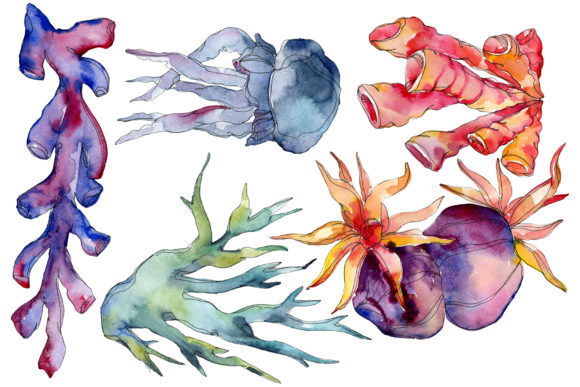
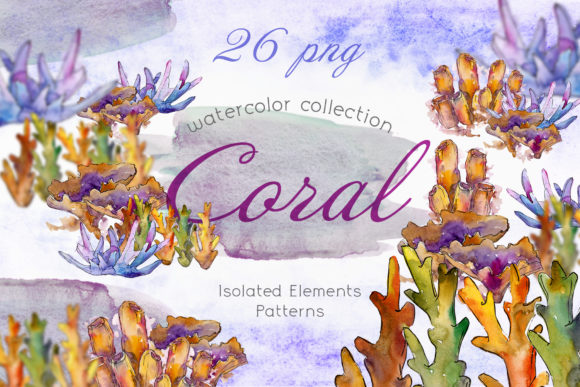
At its core, watercolor sea corals refers to hand-painted depictions of coral species—such as brain coral, staghorn coral, gorgonian fans, and mushroom polyps—executed in watercolor medium. Unlike hyperrealistic digital illustrations or scientific diagrams, watercolor interpretations emphasize mood, texture, light diffusion, and organic flow. The medium’s inherent unpredictability—its bleeding, granulation, and lift-off effects—miraculously echoes the very qualities of living coral: porous, dynamic, symbiotic, and sensitive to subtle shifts in environment.
It’s important to clarify a common misconception: watercolor sea corals are not just “pretty ocean pictures.” They’re often grounded in real marine biology. Many contemporary artists study coral anatomy, reef zonation, and color variations across depths (e.g., how UV exposure intensifies fluorescent pigments in shallow-water corals) before picking up their brushes. This blend of observation and interpretation transforms each piece into both aesthetic expression and quiet education.
Why This Medium Matters—Beyond Aesthetics
Watercolor’s unique properties make it especially well-suited to representing corals:
- Translucency mirrors coral tissue: Coral polyps are semi-transparent, with symbiotic algae (zooxanthellae) glowing beneath thin layers of living flesh—something watercolor’s layered washes replicate intuitively.
- Granulation mimics texture: Mineral-rich pigments like cobalt teal or burnt sienna naturally separate in wet-on-wet applications, echoing the rough, calcified skeletons beneath soft coral surfaces.
- Fluidity reflects ecological interdependence: Just as watercolor pigments bleed and mingle on paper, coral ecosystems thrive on interconnectedness—between polyps, fish, algae, bacteria, and currents.
This isn’t mere coincidence—it’s resonance. When viewers pause over a watercolor sea coral painting, they’re not just seeing color; they’re sensing complexity, fragility, and rhythm. That emotional resonance is precisely why schools, aquariums, and NGOs increasingly commission or display such works—not as decoration, but as access points to deeper learning.
From Studio to Shoreline: Real-World Applications
Watercolor sea corals are gaining traction far beyond fine art galleries. Here’s how they’re making waves in practice:
- Environmental Education: Teachers use student-created coral watercolors to explore topics like pH sensitivity, bleaching triggers, and biodiversity. Coloring a stylized elkhorn coral while discussing its role as a nursery habitat makes abstract concepts tactile and memorable.
- Conservation Campaigns: Organizations like the Coral Restoration Foundation and Reef Check feature original watercolor coral art in reports and social media. Why? Because data charts show decline—but a tenderly painted, half-bleached branching coral invites empathy and action.
- Interior Design & Wellness Spaces: Clinics, spas, and co-working spaces choose watercolor sea coral prints not just for coastal vibes, but for their calming, biophilic effect. Research in environmental psychology links natural patterns—including fractal-like coral forms—to reduced stress and improved focus.
- Digital Creativity: Designers scan and digitize watercolor coral textures for use in web backgrounds, NFT collections supporting reef restoration, and augmented reality exhibits where users “grow” virtual corals by answering ocean literacy questions.
Debunking Myths: What Watercolor Sea Corals Are *Not*
Despite growing popularity, several assumptions persist—let’s gently correct them:
- Myth: “It’s just beginner-friendly art—no technical skill required.”
Truth: Mastering watercolor coral demands deep understanding of pigment behavior, paper absorbency, and timing. Rendering the delicate translucence of a soft coral’s tentacles without muddying the wash takes years of disciplined practice. - Myth: “These paintings ignore scientific accuracy—they’re all fantasy colors.”
Truth: While stylization is welcome, leading artists consult marine biologists and reference underwater photography from institutions like NOAA and the Australian Institute of Marine Science. Accurate species identification and anatomical proportion remain foundational—even in expressive pieces. - Myth: “It’s purely decorative—no link to real-world reef health.”
Truth: Many artists donate proceeds from coral-themed collections to coral nurseries or citizen science apps like Reef Check. Others partner with labs to visualize coral microbiome research—turning microscopic data into intuitive, watercolor-infused infographics.
How to Start Your Own Journey With Watercolor Sea Corals
Whether you’re a curious beginner or an experienced artist seeking new meaning in your practice, here’s a grounded, joyful path forward:
- Observe first, paint second: Watch documentaries like Chasing Coral, browse the NOAA Coral Program database, or visit an aquarium with live coral tanks. Notice how light filters through different species.
- Start simple: Try painting one coral form—like a solitary mushroom coral—using only three pigments: ultramarine blue, quinacridone rose, and yellow ochre. Focus on wet-on-wet blending, not detail.
- Embrace imperfection: Let blooms and backruns happen. In coral reefs, variation is survival—not flaw. Your “mistake” might become the perfect suggestion of algal fluorescence or sediment drift.
- Connect your art to action: Share your process online with #WatercolorCoralWatch, tag local reef initiatives, or mail a small print to a marine science classroom. Art gains power when it circulates with purpose.
A Living Legacy—More Than Pigment on Paper
Watercolor sea corals endure because they speak a dual language—one of beauty and urgency. Each wash echoes the pulse of a living reef; each lifted highlight recalls the fragile clarity of healthy seawater. In an age of climate anxiety and ecological overwhelm, this art form offers something rare: hope with honesty. It doesn’t hide coral bleaching—it may depict it, softly, in faded pinks and exposed grays—yet still holds space for regeneration, resilience, and quiet reverence.
That’s why teachers keep coral watercolor templates in lesson plans, why designers select them for sustainability reports, and why individuals hang them above desks—not as escape, but as reminder. We are not separate from the sea. Its rhythms live in our breath, its chemistry shapes our climate, and its colors, translated through water and pigment, can reawaken our sense of kinship with the living world.
So the next time you see a watercolor sea coral—whether in a museum, a textbook, or a friend’s Instagram story—pause. Look closer. Notice how the pigment pools like tide pools, how edges soften like coral larvae drifting on currents. You’re not just viewing art. You’re witnessing a conversation across disciplines, species, and generations—one drop of watercolor at a time.