Tropical Fish Watercolor: A Distinctive Artistic Approach for Nature-Inspired Creativity
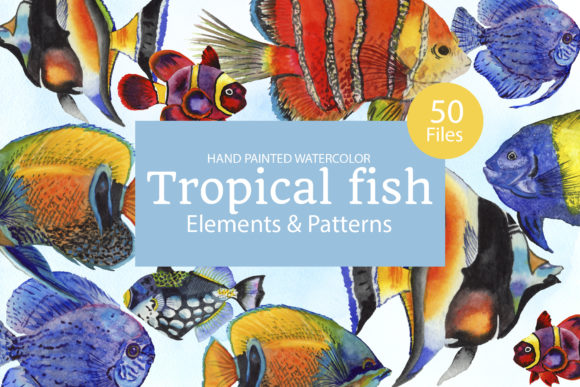
Tropical Fish Watercolor refers to a specialized application of watercolor painting focused on rendering vibrant, fluid depictions of marine life—particularly reef-dwelling fish—with attention to translucency, movement, and environmental context. It is not a branded product or proprietary technique, but rather a stylistic and thematic category defined by subject matter, color sensibility, and technical priorities. Practitioners emphasize luminous layering, controlled granulation, and soft-edged washes to evoke the shimmering, ever-shifting quality of underwater light. Unlike botanical or landscape watercolor, which often prioritize structural accuracy or atmospheric perspective, Tropical Fish Watercolor places equal weight on biological fidelity and expressive abstraction—capturing both the anatomical nuance of a mandarin fish’s ornate scales and the dreamlike ambiguity of its surrounding water column.
What Sets Tropical Fish Watercolor Apart from Broader Watercolor Practices
While all watercolor relies on pigment suspended in gum arabic and water, Tropical Fish Watercolor introduces distinct constraints and opportunities. The subject demands precise control over transparency: too much opacity dulls the illusion of depth; too little wash leaves forms indistinct. Artists routinely use masking fluid to preserve highlights on iridescent fins or eye reflections—details that would otherwise vanish under successive glazes. They also favor pigments with strong staining qualities (like phthalo blue or quinacridone rose) to hold up against repeated rewetting, yet balance them with more granulating earth tones (such as burnt sienna or lunar black) to suggest texture in coral substrates.
This approach diverges meaningfully from illustrative watercolor used in field guides, where clarity and taxonomic precision dominate. It also differs from expressive or abstract watercolor, where form dissolves entirely into gesture and tone. Tropical Fish Watercolor occupies a middle ground—scientifically informed but emotionally resonant, technically disciplined yet visually lyrical. Its success hinges less on speed or spontaneity and more on deliberate sequencing: establishing water density first, then building fish form through subtle shifts in value and temperature rather than hard outlines.
Comparing Execution Methods: Wet-on-Wet, Glazing, and Drybrush Applications
Within Tropical Fish Watercolor, technique choice directly shapes outcome and suitability for different goals:
- Wet-on-wet excels at suggesting ambient light diffusion—ideal for background water layers or soft coral haze. However, it offers limited control for defining fin edges or pattern detail, making it better suited for early stages than final rendering.
- Glazing is the cornerstone method: thin, transparent overlays build chromatic complexity without muddying. A single glaze of cobalt teal over a dried yellow-orange base can replicate the optical shift seen in angelfish flanks when viewed through shifting water. This method rewards patience and planning but allows corrections between layers.
- Drybrush adds crispness selectively—useful for scale texture on a parrotfish or frayed tentacles of a sea anemone—but risks harshness if overused. It works best as punctuation, not foundation.
Artists who prioritize immediacy may find glazing too slow; those drawn to bold contrast may struggle with the medium’s inherent softness. Neither makes Tropical Fish Watercolor “better” or “worse”—only differently aligned with individual workflow preferences and expressive intent.
Materials Matter—But Not in the Way You Might Expect
High-grade paper (300 gsm cold-pressed cotton) remains essential—not because it’s required for all watercolor, but because Tropical Fish Watercolor frequently involves reworking areas multiple times. Repeated lifting, rewetting, and glazing test paper integrity. Cheaper wood-pulp papers buckle, pill, or lose surface tooth after two or three layers, compromising the delicate transitions critical to underwater realism.
Pigment selection follows similar logic. Student-grade paints often contain fillers that reduce transparency and increase drying time unpredictably—both liabilities when building layered aquatic effects. Yet this doesn’t mean every pigment must be professional grade. Many artists mix mid-tier blues and greens with premium warm tones, reserving top-tier granulating pigments (like hematite or indanthrone blue) for key focal points where texture and depth are non-negotiable.
Brushes, too, reflect functional tradeoffs. Round sable brushes offer responsiveness for fine line work on fish profiles, but synthetic rounds with resilient tips perform equally well for washes and hold up longer under frequent rinsing. The ideal toolset prioritizes consistency and control over prestige.
When Tropical Fish Watercolor Fits—and When It Doesn’t
Tropical Fish Watercolor shines in contexts where atmosphere, color harmony, and organic rhythm take precedence over rigid realism. It suits artists exploring themes of fragility, adaptation, or ecological interdependence—think illustrated journal pages documenting reef conservation efforts, limited-edition prints for marine education initiatives, or personal studies that prioritize observational learning over finished presentation.
It becomes less practical when speed, reproducibility, or high-contrast definition are primary needs. For commercial illustration requiring tight deadlines or vector-ready assets, digital tools often deliver greater flexibility. Similarly, artists whose primary interest lies in macro-level anatomy—such as detailed scale counts or fin-ray mapping—may find traditional scientific illustration methods (ink wash, stippling, or digital line art) more efficient and precise.
Beginners sometimes assume Tropical Fish Watercolor is inherently “easier” due to its emphasis on flow and softness. In practice, it demands heightened awareness of pigment behavior, paper response, and timing—skills developed through repetition, not intuition. Those new to watercolor may benefit from starting with simpler subjects (leaves, feathers, or still-life fruit) before advancing to the nuanced optical challenges of underwater subjects.
Realistic Use Cases and Practical Tradeoffs
A marine biology educator might use Tropical Fish Watercolor to create classroom visuals that emphasize habitat relationships—showing how a clownfish’s orange hue interacts with the muted pinks and purples of its host anemone, rather than isolating the fish as a specimen. Here, the medium’s strength lies in contextual storytelling, not isolated accuracy.
By contrast, a wildlife illustrator preparing plates for a field guide would likely opt for tighter linework and flatter color fields, ensuring species identification remains unambiguous across print sizes and lighting conditions. Tropical Fish Watercolor’s intentional softness could obscure diagnostic markings at small scale.
For hobbyists maintaining home aquariums, Tropical Fish Watercolor offers a reflective, meditative practice—translating daily observation into visual language. Its iterative nature supports learning: each painting reveals something new about light refraction, color temperature shifts, or behavioral posture. But it does not replace photography for documentation or serve as a substitute for anatomical reference texts.
Decision Factors to Weigh Before Committing
Consider these practical questions before investing time or materials:
- Do your goals center on evoking mood, environment, and chromatic interaction—or on precise morphological representation?
- Are you comfortable with a process that values revision, layering, and subtle variation over immediate results?
- Does your available workspace support consistent humidity control? (Excess dryness accelerates wash edges; high humidity delays drying between glazes.)
- Will your final output be viewed primarily in person, or digitally? Scanned watercolor reproductions can flatten subtle granulation and lift effects unless captured with high-resolution, color-calibrated equipment.
Tropical Fish Watercolor is neither universally superior nor niche to the point of irrelevance. Its value emerges in alignment—when the medium’s physical properties match the communicator’s intent, the learner’s curiosity, or the creator’s expressive priorities. It asks for attentiveness, rewards patience, and returns a unique visual vocabulary for engaging with one of Earth’s most vivid ecosystems—not as static image, but as living, breathing, light-filled experience.