The Betsy Ross Flag: Symbol, Story, and Enduring Cultural Resonance
When you see a circle of thirteen white stars on a blue field—set against red and white stripes—you’re looking at more than a historic banner. You’re encountering one of the most instantly recognizable visual shorthand expressions of American origin: the Betsy Ross Flag. Its simplicity is striking, its symbolism layered, and its presence far more widespread today than many realize—not just in museums or textbooks, but in branding, civic design, digital art, and even interior spaces where authenticity and heritage meet modern sensibility.
What Exactly Is the Betsy Ross Flag?
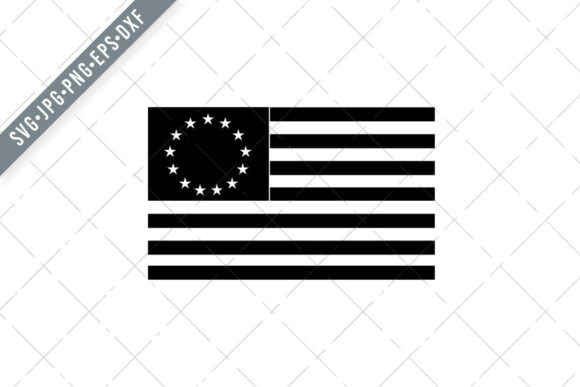
The Betsy Ross Flag refers to the earliest widely accepted design of the United States flag, attributed to seamstress Betsy Ross of Philadelphia in 1776. While historical documentation remains limited—and scholarly consensus holds that Ross likely refined rather than originated the design—the flag’s defining features are consistent: thirteen alternating red and white stripes representing the original colonies, and a blue canton with thirteen five-pointed stars arranged in a circle. That circular arrangement is key—it suggests equality, unity without hierarchy, and a deliberate break from monarchical symmetry.
Ross herself was no passive artisan. A widow who ran her own upholstery business, she navigated colonial trade networks, worked with military suppliers, and operated with financial independence rare for women of her era. Her story endures not because it’s fully verifiable in every detail, but because it reflects real conditions: skilled labor, entrepreneurial resilience, and quiet participation in nation-building—themes that resonate strongly with today’s creators, small-business owners, and educators seeking inclusive narratives.
Why It’s Gaining Fresh Attention—Beyond Patriotism
In recent years, the Betsy Ross Flag has reemerged—not as a partisan emblem, but as a design motif rooted in craft tradition and visual clarity. Designers are drawn to its balanced geometry: the precise star count, the rhythmic stripe repetition, and the clean negative space of the canton. Unlike later flag iterations with added stars or altered proportions, the Betsy Ross version offers a finite, human-scale composition—ideal for logos, textile patterns, or minimalist wall art.
This shift aligns with broader cultural movements: a growing preference for intentional symbolism over generic aesthetics, renewed interest in material history (think handmade ceramics, analog photography, archival typography), and increased scrutiny of how national icons are contextualized—not erased, but understood with nuance. Educators use the Betsy Ross Flag to spark conversations about source criticism, oral history, and how symbols accrue meaning across generations. Marketers reference it when developing heritage-inspired campaigns—not to evoke nostalgia alone, but to signal craftsmanship, continuity, and thoughtful curation.
From Historical Artifact to Modern Visual Language
Technology has quietly expanded the Betsy Ross Flag’s utility. Vector files of its layout are widely available under open licenses, enabling designers to adapt it responsibly—for example, integrating the star circle into a brand’s icon system or using stripe rhythm as a grid foundation for web layouts. Some small-batch apparel brands feature it embroidered on organic cotton tees—not as political statement, but as homage to early American textile work and female enterprise. Others reinterpret it subtly: replacing stars with hand-drawn botanical motifs while preserving the circular structure, or animating the stripes as gentle horizontal scrolls in digital installations.
Importantly, this isn’t about “updating” the flag to make it “relevant.” It’s about recognizing how its formal qualities—symmetry, restraint, legibility at distance—meet contemporary needs for clarity in visual communication. In an age of information overload, the Betsy Ross Flag’s uncluttered composition functions like a visual pause button: simple enough to register instantly, rich enough to invite closer looking.
Practical Uses Across Professions
For educators: The Betsy Ross Flag serves as an accessible entry point into primary-source analysis. Students compare Ross’s account (recorded decades later by her grandson) with congressional records, flag resolutions from 1777, and surviving period flags like the “Cowpens Flag” or “Bennington Flag.” This builds media literacy while grounding abstract concepts like evidence and interpretation in tangible objects.
For designers and marketers: Its proportions (traditionally 10:19, though early versions varied) offer a flexible canvas. A logo might borrow only the star circle, scaled and recolored to match brand palettes—retaining symbolic weight without literal replication. When used in physical spaces (e.g., conference backdrops or retail signage), its familiarity creates instant visual cohesion, especially in settings emphasizing American-made goods or local craftsmanship.
For entrepreneurs and makers: The story behind the flag supports authentic storytelling. A furniture maker sourcing reclaimed Pennsylvania barn wood might reference Ross’s Philadelphia roots in product descriptions—not to claim lineage, but to anchor their work in regional material history. Similarly, a stationery brand printing on cotton rag paper could highlight the tactile parallels between 18th-century textile production and today’s small-batch papermaking.
For content creators and bloggers: The Betsy Ross Flag provides rich cross-disciplinary hooks—art history meets textile science, civics meets design thinking. A short video might contrast its hand-sewn construction with modern flag manufacturing techniques; a newsletter essay could explore how its circular star arrangement mirrors current UX principles like radial navigation or inclusive interface design.
Responsible Engagement—Not Just Reproduction
Using the Betsy Ross Flag thoughtfully means moving beyond surface-level adoption. It’s worth noting that while the flag predates the U.S. Constitution and the formal codification of civil rights, its imagery is sometimes invoked in contexts that contradict its foundational ideals of collective self-governance and equal representation. Professionals today increasingly pair its use with context—whether through captioning, footnotes, or companion narratives—that acknowledges complexity without diluting significance.
That doesn’t require disclaimers on every t-shirt. But it does mean considering placement and purpose: Is it part of a museum exhibit exploring women’s labor in wartime? A subtle watermark on a grant application for historic preservation? A classroom poster alongside quotes from Abigail Adams and Phillis Wheatley? Each choice signals intention—and strengthens credibility with audiences attuned to ethical storytelling.
Where to Start—Actionable Next Steps
If you’re considering incorporating the Betsy Ross Flag—or its design logic—into your work, begin with observation, not application:
- Study originals: Examine high-resolution images of surviving 18th-century flags at institutions like the Museum of the American Revolution or the Smithsonian. Note variations in star shape, stripe width, and fabric texture—imperfections that reveal human making.
- Map its structure: Sketch the star circle using compass-and-straightedge methods. Notice how spacing affects perception—tighter arrangements feel dense; wider ones suggest openness. These subtleties matter in layout design.
- Trace its evolution: Compare it to the 1777 Flag Resolution (“thirteen stripes, alternate red and white; that the union be thirteen stars, white in a blue field”) and later adaptations. Understanding constraints helps inform creative choices today.
- Seek living connections: Visit historic sites like the Betsy Ross House (with its updated interpretive approach) or talk with contemporary flag conservators. Their insights bridge past technique and present practice.
The Betsy Ross Flag endures not because it’s frozen in time, but because it invites engagement—on historical, aesthetic, and ethical levels. Whether you’re selecting fonts for a civic project, designing packaging for a heritage food brand, or preparing a lesson on Revolutionary-era material culture, its balance of simplicity and depth offers a rare kind of utility: visual clarity paired with narrative richness. And in a world where attention is scarce and meaning is contested, that combination remains quietly powerful.